Last updated October 15, 2026






Free written scope consultation - allowances, timeline, and change-order rules on paper before a single trade is scheduled
Seasonal Construction Care for Fresno: Year-Round Homeowner’s Guide
Fresno averages 20 days per year above 105°F. That is not a trivia fact. It is a load-bearing reality for your roof, your windows, your concrete, and your HVAC system. Sustained heat like that degrades asphalt shingle granules, splits wood frames, and pushes cooling equipment past its design capacity. The repair needs created in July do not show up in July. They show up in October, and they get misattributed to normal wear. This guide explains how Fresno’s actual climate, not a generic seasonal checklist, should dictate when you inspect, maintain, and schedule work on your home.
Styles & brands we work with


Quick Answer
Seasonal construction care in Fresno means timing your inspections and maintenance to the city’s three real seasons: pre-summer heat preparation (April – May), peak heat and material behavior (June – September), and the tule fog damp season (November – February). Homeowners who align maintenance with these cycles spend less on repairs because they catch failures at the moment they start, not after a full season of damage. The most cost-effective action is a pre-summer HVAC service and roof inspection before the first 105°F day, plus a post-winter drainage and stucco check before spring irrigation begins.
Table of Contents
- Pre-Summer Contractor Tasks (April – May): Heat Load and the Building Envelope
- Peak Summer Material Behavior (June – September): What Heat Does to a House
- Tule Fog Season Building Envelope Tasks (November – February)
- Post-Winter Structural Checks (March): Soil, Stucco, and Drainage
- Using Fresno’s January – February Construction Slowdown to Your Advantage
- What Seasonal Maintenance Actually Costs in Fresno
- Common Mistakes to Avoid
- When to Call a Professional
- Frequently Asked Questions
- The Bottom Line
Pre-Summer Contractor Tasks (April – May): Heat Load and the Building Envelope
By late April, Fresno’s daytime highs are already brushing the mid-80s. The window for comfortable, effective contractor work is closing. Once June arrives, daytime surface temperatures on roofs and south-facing walls routinely exceed 140°F, and three specific tasks become much harder to do correctly.
1. HVAC Service Before Peak Demand
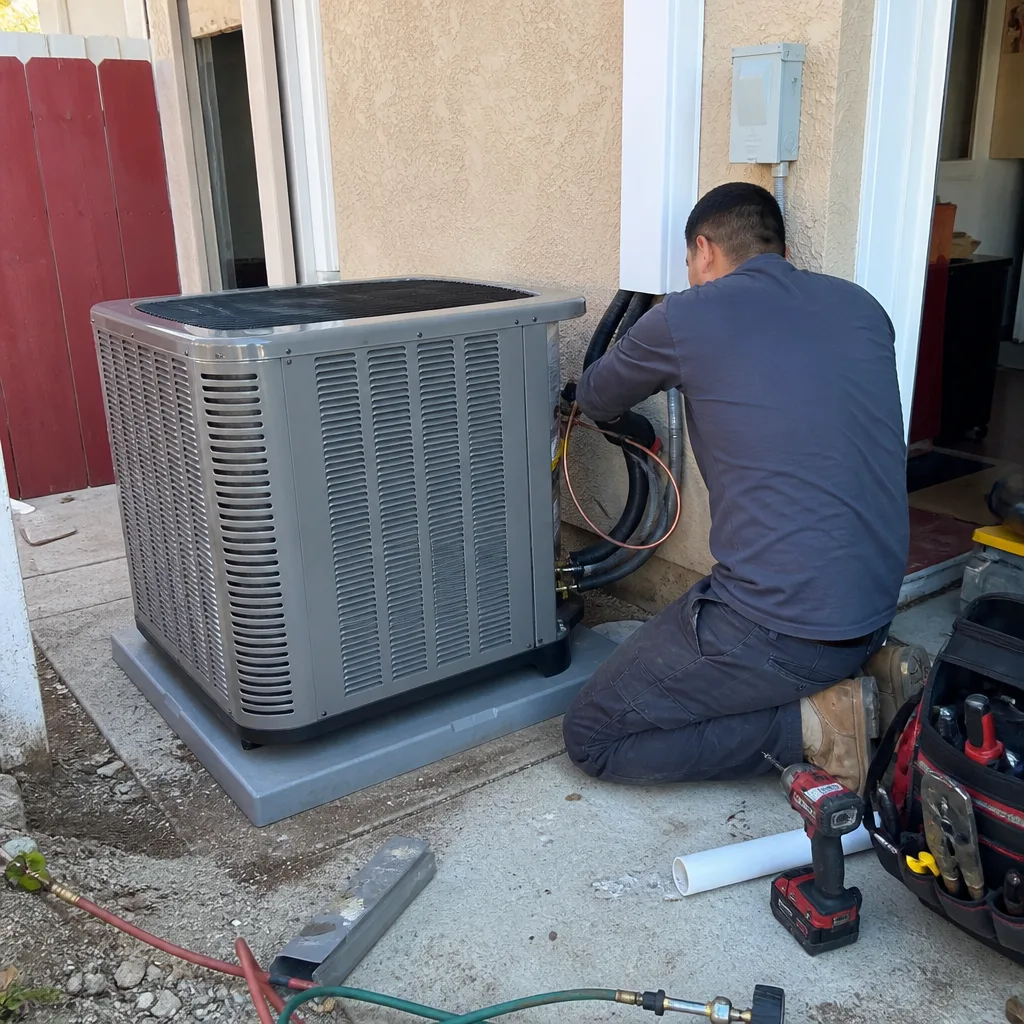
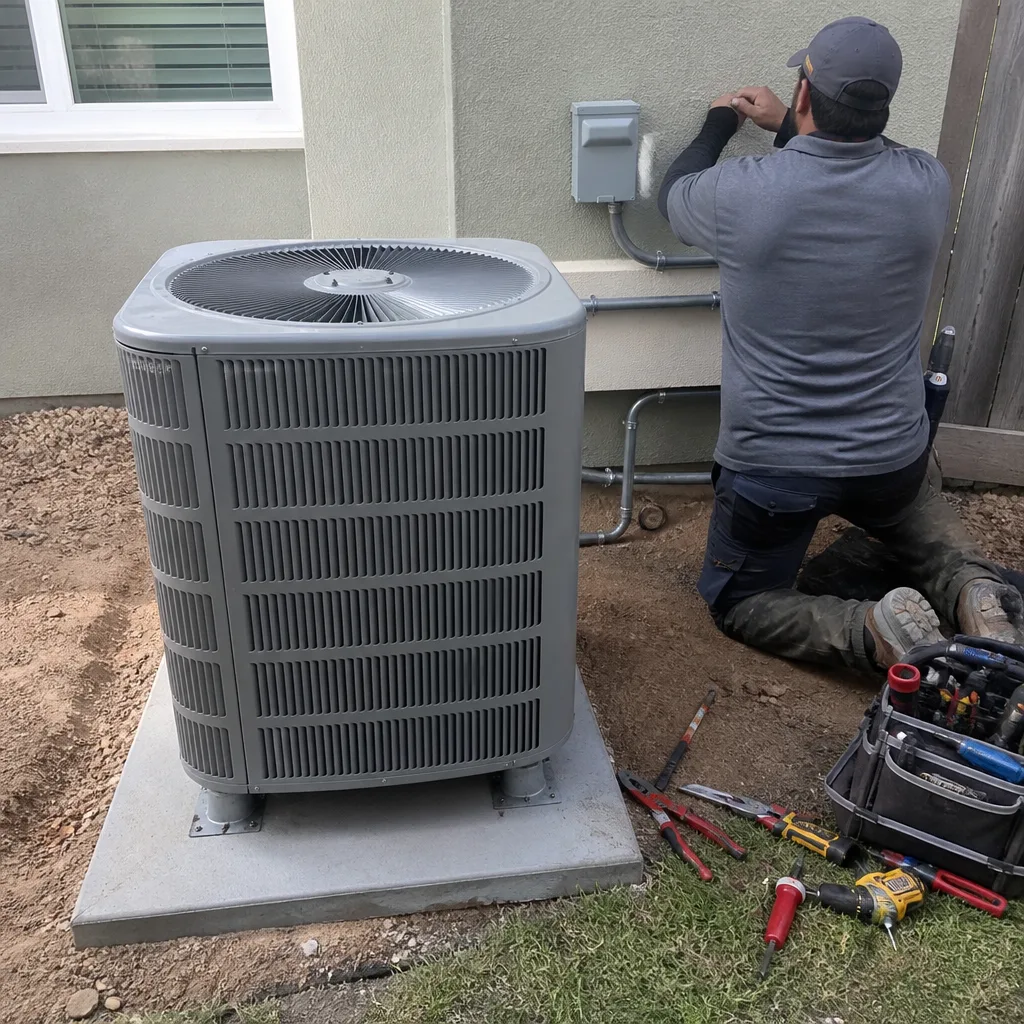
Cooling equipment in Fresno runs harder than almost anywhere else in California. A system in the Central Valley can log 2,000+ run-hours per cooling season. Compare that to coastal California, where a system might run 300 hours. That workload means a neglected condenser coil or a low refrigerant charge will fail in July, not in October. Schedule a full HVAC service in April or early May. The technician should check refrigerant levels, clean the condenser and evaporator coils, test the capacitor, and verify thermostat calibration. Book this before the first 105°F day, because that is when every HVAC company’s schedule fills for weeks.
2. Elastomeric Roof Coating Inspection
Many Fresno homes built since the 1980s have low-slope or flat roof sections coated with elastomeric material, typically a silicone or acrylic coating. This coating is a sacrificial layer. It reflects UV radiation and keeps the underlying substrate from breaking down, but it degrades in direct proportion to sun exposure. A roof coating that is chalky to the touch, has visible cracking, or shows thin spots where the substrate is visible needs recoating before summer. Recoating in April costs $1.50 to $3.00 per square foot in Fresno. Waiting until the coating fails completely means repairing the substrate underneath, which starts around $6 to $10 per square foot. The inspection itself is simple and most roofing contractors in Fresno will do it free as part of a broader roof evaluation.
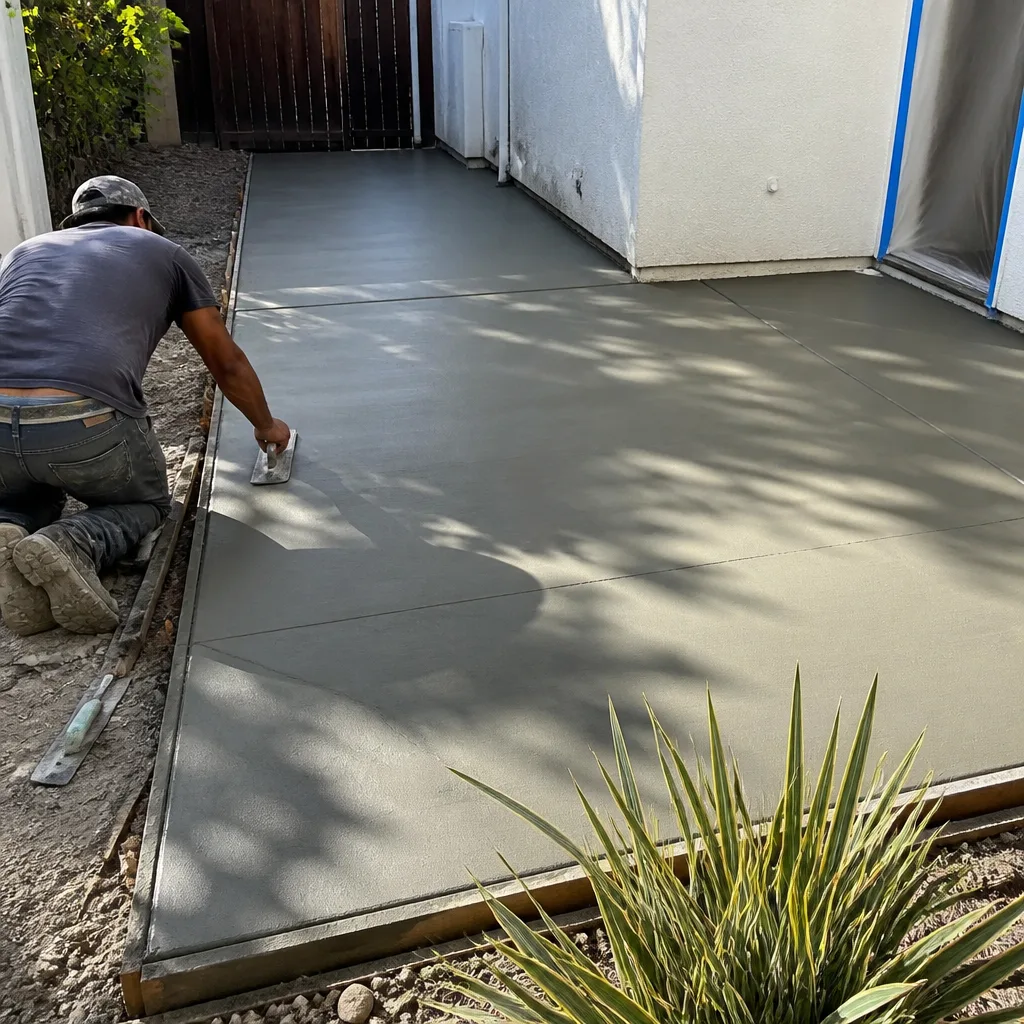
3. Concrete Expansion Joint Inspection
Fresno’s concrete moves. The daily temperature swing from 55°F at night to 100°F by afternoon causes measurable expansion and contraction. Expansion joints, the saw-cut or tooled lines in driveways, patios, and walkways, exist to absorb that movement. When joint sealant dries out and debonds, the concrete panels begin spalling against each other. Small chips become cracks, and cracks become heaving. Check expansion joints in April. Look for missing or crumbling sealant, joint edges that are chipped, and panels that have shifted so the joint is no longer aligned. Sealant replacement runs $3 to $6 per linear foot depending on joint width. Left unsealed, a failing joint can turn a $400 sealing job into a $4,000 slab replacement.
Bradford Remodeling Co Fresno sees the same April pattern every year: homeowners call in July about a roof leak or a dead AC, and the failure traces back to a skipped April inspection. The General Contractor in Fresno who works year-round knows the calendar. Timing the inspection is the cheapest maintenance decision a homeowner makes all year.
Peak Summer Material Behavior (June – September): What Heat Does to a House
Fresno’s summer is not just hot. It is dry, sustained, and brutal on specific materials in predictable ways. Understanding what heat does to your house helps you make better decisions about when to schedule work and when to hold off.
Why Caulk and Sealant Jobs Should Not Be Scheduled During 100°F+ Days
Exterior caulk and sealant, whether silicone, polyurethane, or hybrid polymer, has a specified application temperature range on its technical data sheet. Most products specify installation between 40°F and 90°F. On a 105°F Fresno afternoon, the surface temperature of a south-facing stucco wall can be 150°F or higher. When sealant is applied to an overheated substrate, three things go wrong. The material skins over too fast, trapping solvent underneath and creating bubbles. The substrate expands from heat, so the joint is at its narrowest; when it cools and contracts, the sealant gets stretched past its elastic limit and tears at the bond line. And the sealant cures too quickly, producing a weak, chalky bead that fails within a season.
A disciplined contractor knows this. We schedule caulking and sealant work in Fresno for early morning hours during summer, or we push exterior sealing jobs to spring and fall. If a contractor offers to do exterior caulking on a July afternoon without raising the temperature issue, that is a red flag about how carefully they run their jobs. This is one of the reasons we put our schedules in writing before work begins, so the sequence of work is documented and the homeowner can see it was planned for the right conditions.
Wood Movement, Window Frames, and Door Clearances
Wood is hygroscopic, meaning it absorbs and releases moisture. Fresno’s summer air is dry, often below 20% relative humidity. Exterior wood, including window frames, door jambs, fascia boards, and painted trim, shrinks noticeably. This shrinkage creates hairline gaps at joints, loosens paint adhesion, and can cause doors to stop latching or start sticking depending on which way the wood moved. In our experience working on Home Remodeling in Fresno, the most common summer service call is a front door that will not latch properly. The fix is usually a minor adjustment to the strike plate or hinge, not a new door, but the underlying cause is the dry air. Do not paint exterior wood in peak summer. The surface is too hot and too dry for proper adhesion. Paint applied at 110°F can fail within two years.
Stucco and Hairline Cracking from Thermal Cycling
Stucco expands and contracts with the heat. Fresno’s daily swing of 40+ degrees in summer, repeated over 90 days, is a stress test for any stucco wall. Hairline cracks appear at corners, around window and door openings, and at transitions between materials. Most hairline cracking is cosmetic. But cracks wider than 1/16 inch, cracks that grow over a season, or cracks that run diagonally from a corner of a window opening may indicate movement that needs evaluation. Summer is not the time to repair stucco, because the material cures best in moderate temperatures. Instead, note the cracks, photograph them, and schedule a repair for October or March when temperature and humidity allow proper curing.
Tule Fog Season Building Envelope Tasks (November – February)
Tule fog is the defining weather event of a Fresno winter. Dense, cold, and persistent, it can sit in the Valley for days or weeks. Fog means humidity above 90% at low temperatures, and that sustained dampness is harder on certain building systems than any summer heat.
Attic Ventilation Check Before Dampness Sets In
A poorly ventilated attic in tule fog season becomes a condensation chamber. Warm, moist air from the living space rises into the attic, meets the cold underside of the roof sheathing, and condenses. Over a fog season, that condensation soaks insulation, drips onto ceiling drywall, and creates conditions for mold. The fix is checking attic ventilation before November. Confirm soffit vents are clear of insulation and debris. Confirm ridge vents or roof vents are unobstructed. Confirm bathroom and kitchen exhaust fans discharge outside, not into the attic. The cost to correct a ventilation problem is $300 to $800 for most Fresno homes. The cost to remediate mold and replace a failed ceiling is ten times that.
Crawlspace Moisture Inspection
Homes on raised foundations in Fresno, common in older neighborhoods like the Tower District and Fresno High area, have crawlspaces that breathe outside air. During tule fog, the outside air is cold and wet. A crawlspace with a dirt floor and no vapor barrier will hold that moisture for weeks. Wet crawlspace air finds its way into the living space through floor penetrations and wall cavities. The symptoms are a musty smell in winter, cupping hardwood floors, and rust on ductwork or plumbing straps. The fix is a moisture inspection before fog season starts: check for standing water, inspect the vapor barrier if one exists, verify foundation vents operate, and look for signs of rodent activity, which spikes in winter as animals seek shelter. A proper vapor barrier installation in a typical Fresno crawlspace runs $1,500 to $3,500 depending on square footage and access.
Exterior Wood Trim and Paint Condition
Wood trim absorbs water when humidity stays above 90% for days. Water intrusion into wood accelerates paint failure, especially at end grain and joints. Walk the exterior of your home in October or early November. Look for peeling paint, soft spots where you can push a screwdriver into the wood, and gaps at trim joints. Mark what you find. Winter is not the time to repair, because wood is swollen with moisture and paint will not cure properly. But identifying the damage early lets you budget and schedule a repair for March or April, when conditions are right. This is exactly how a qualified contractor approaches home remodeling in Fresno: diagnose in the wet season, repair in the dry season.
Window and Door Weatherstripping
Fog means condensation on windows and door frames. Where weatherstripping is worn or missing, that condensation becomes a pathway for moisture into wall cavities and jambs. Check the seals on all exterior doors and operable windows in November. A simple test: close the door or window on a dollar bill. If the bill slides out easily, the seal is gone. Weatherstripping is a $5 per door or window DIY fix, and one of the cheapest energy and moisture upgrades available. Ignoring it in a fog season invites rot in the jamb and higher heating bills.
Post-Winter Structural Checks (March): Soil, Stucco, and Drainage
By March, the fog has lifted and the Valley is drying out. That transition from wet winter soil to dry spring soil is itself a structural event. Fresno sits on a mix of alluvial soils with high clay content in many neighborhoods. Clay expands dramatically when wet and contracts when dry. A winter of rain followed by a spring dry-out means the soil under your foundation is moving. Here is what to check in March.
1. Foundation and Slab Movement
Walk the perimeter of your foundation. Look for new cracks in the stem wall or slab edge, especially cracks that are wider at the top than the bottom, which can indicate differential settlement. Look at interior drywall above doorways and windows for new diagonal cracks. Most homes show some minor cracking from seasonal soil movement, and most of it is not a structural problem. But changes from one year to the next matter. Photograph cracks every March with a coin or ruler for scale. If a crack grows over two consecutive seasons, have it evaluated by a structural engineer.
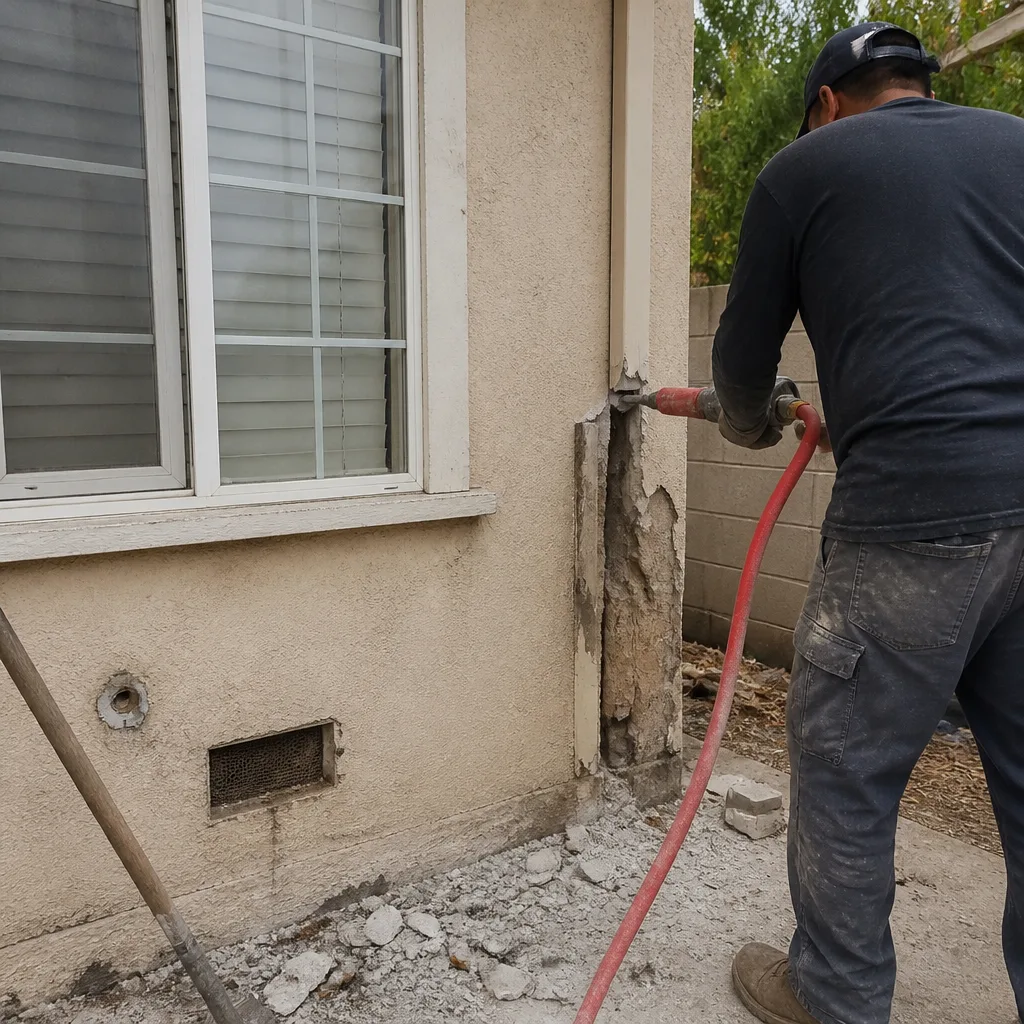
2. Stucco Freeze Damage
Fresno does get frost. The average winter low in January is 37°F, but clear nights after a rain can drop below freezing. Water that has seeped into stucco hairline cracks freezes, expands, and widens those cracks. By March, any stucco that absorbed winter moisture will show the evidence: spalling, flaking, or visible widening of existing cracks. March is the right time to repair stucco, because the material can cure properly in mild, dry conditions. Small crack repair runs $300 to $800 for typical cosmetic work. Full stucco restoration on a wall with widespread failure runs $5 to $12 per square foot in Fresno.
3. Drainage Grade Verification Before Spring Irrigation
Before you turn on your sprinklers for spring, verify that water still flows away from the foundation. Winter rains settle soil, and sometimes the grade that was correct last year is no longer correct. Walk around the house with a level. The ground should slope away from the foundation at a rate of at least 6 inches of drop over the first 10 feet. Look for soil that has settled against the foundation, creating a low spot. Re-grading a short section of foundation perimeter is a $200 to $500 job if caught early. If water pools against the foundation through a full irrigation season, you are inviting expansive clay soils to swell directly against your slab or stem wall.
4. Roof Check After Winter Storms
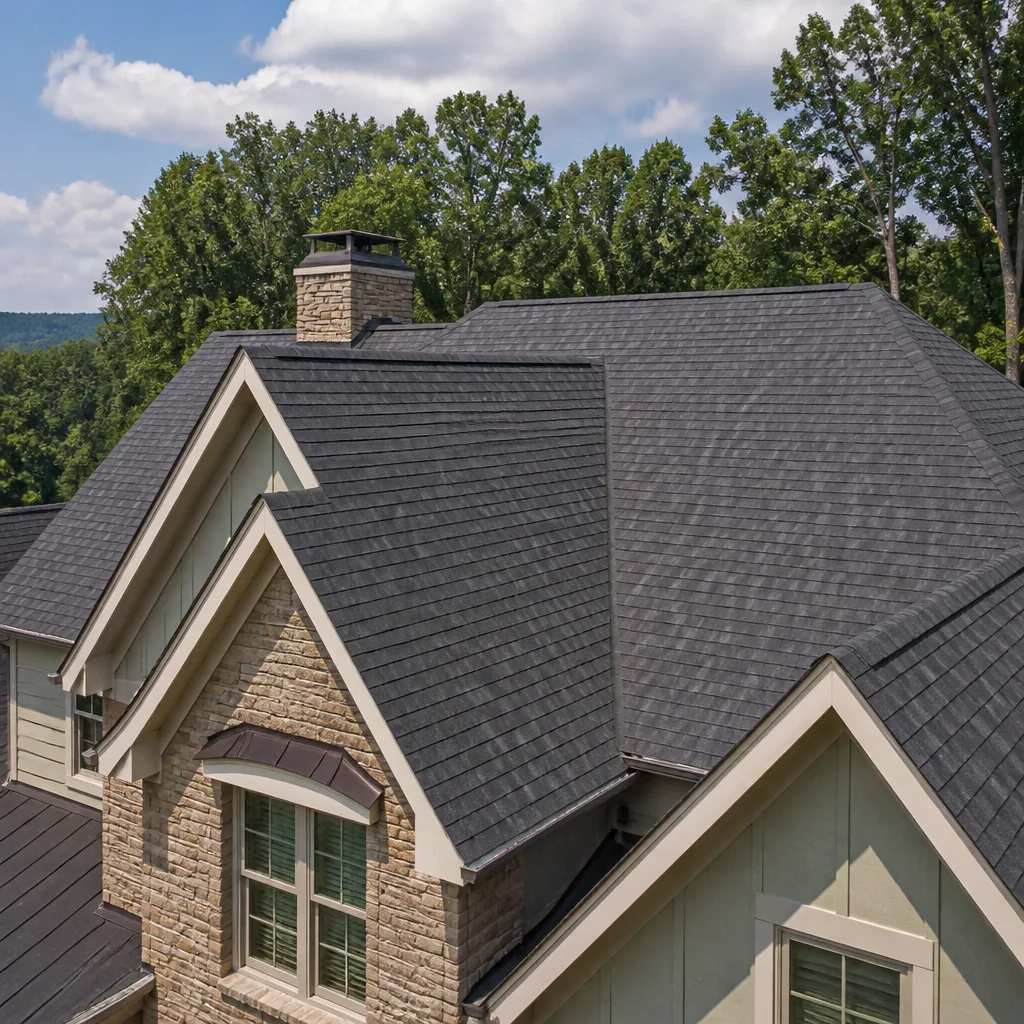
March is the right time for a roof inspection in Fresno. The winter rains have passed, but the damage they caused is still there. Look for lifted or missing shingles, granules in the gutters, rusted or shifted flashing, and moss or debris buildup in valleys. A roof inspection from a qualified contractor costs $150 to $350 in Fresno, and many companies will credit that fee toward repairs. Left unchecked, a small lifted shingle becomes a leak path during the next winter’s first real storm.
Using Fresno’s January – February Construction Slowdown to Your Advantage
Contractors in Fresno are busy from March through October. That is when the weather allows outdoor work and when most homeowners schedule their projects. January and February are different. The volume of work drops, and that changes the economics of hiring a contractor in your favor.
Better Availability
A contractor who is booked six weeks out in May can often start a project in February within two weeks. That means your project gets scheduled, staffed, and started without the spring rush. You are not competing with every other homeowner who waited until the fog lifted to make a call.
Faster Permit Processing
The City of Fresno Building and Safety Division processes permits year-round, but the volume of applications drops in winter. A permit that takes four to six weeks in spring can be issued in two to three in January. If your project requires plan review, that difference compounds. Starting the permit process in January for a project you want completed by summer is simply the smartest scheduling move a Fresno homeowner can make.
More Competitive Pricing on Some Trades
This is not a discount pitch. It is a market fact. When a contractor’s schedule is thin, the written price you receive reflects a lower overhead allocation for that month. The difference is often 5 to 10% on interior work that can be done regardless of weather, like a kitchen remodeling in Fresno project. A project priced in January with a written, fixed bid means you know exactly what the job costs before the spring rush changes everyone’s availability.
What to Schedule in Winter
Winter is ideal for interior work that does not depend on warm, dry conditions: kitchen remodels, bathroom remodels, interior painting, flooring, electrical, and plumbing. It is also the season to complete the design and permitting for exterior work you want done in spring. At Bradford Remodeling, we write every price before work begins regardless of season, but the calendar still matters for scheduling. Our clients who plan in January have their projects completed before Memorial Day, while those who call in April are waiting until August.
What Seasonal Maintenance Actually Costs in Fresno
Numbers matter. Here is what typical seasonal maintenance items cost in the Fresno market as of this writing. Ranges vary based on home size, access, and existing conditions.
| Maintenance Item | Typical Fresno Cost Range | Best Season |
|---|---|---|
| HVAC seasonal service (inspection and cleaning) | $120 – $250 | April – May |
| Roof inspection | $150 – $350 | March or October |
| Elastomeric roof recoating (per sq ft) | $1.50 – $3.00 | April – May |
| Concrete joint sealant replacement (per linear ft) | $3 – $6 | April – May |
| Crawlspace vapor barrier installation | $1,500 – $3,500 | October – November |
| Attic ventilation correction | $300 – $800 | October – November |
| Stucco crack repair | $300 – $800 | March – April |
| Foundation perimeter re-grading | $200 – $500 | March |
| Weatherstripping replacement (per opening) | $5 – $30 | November |
These are market ranges, not quotes. Every home is different, and the only price that matters is the one written for your specific home. At Bradford Remodeling Co Fresno, the written price we give you before work begins is the price you pay. No numbers move at the door, and every project is covered by our 365-Day Done Right Promise: if the work fails within one year, we return and correct it at no charge.
Common Mistakes to Avoid
- Skipping pre-summer HVAC service to save $200. A failed condenser in July means emergency repair pricing, a multi-day wait for parts, and a house that is uninhabitable during the worst heat. The $200 April service is the cheapest insurance you can buy in Fresno.
- Scheduling exterior caulking or painting in July or August. Material data sheets specify installation temperatures for a reason. Work done above 100°F fails early, and then you pay twice.
- Ignoring a crawlspace moisture problem until you smell it upstairs. By the time mustiness is detectable in the living space, the problem has been growing for months. Inspect before fog season starts.
- Assuming a hairline stucco crack never changes. Freeze-thaw cycling widens cracks year over year. Photograph them annually and compare. Growth means movement.
- Waiting until spring to call a contractor for a summer project. By April, good contractors are booked through July. Plan in January and you get better availability, faster permits, and pricing that reflects the season.
- Not checking your drainage grade before turning on sprinklers. A settled low spot against the foundation, combined with a full irrigation season against expansive clay soil, is a slow-motion structural problem.
- Treating a winter quote as if it is good indefinitely. Material prices move. A written price from January is not automatically valid in June. The Garrison Standard means our written prices are firm once issued, but the price for a project you have not started may change between seasons.
When to Call a Professional
Some seasonal maintenance is appropriate for a careful homeowner. Replacing weatherstripping, clearing gutters, photographing cracks, and checking drainage grade are all reasonable DIY tasks. Other work requires training and equipment. Call a professional when you see: a roof leak or missing flashing around penetrations, any crack in a foundation wall wider than 1/16 inch and growing, electrical smells or discoloration around an electrical panel, a crawlspace with standing water or visible mold, an HVAC system that cannot hold temperature, or any exterior wall with cracking that extends through the stucco into the structure behind it. On a job like a kitchen remodel, the wrong sequence of work creates problems that hide behind finished walls. Bradford Remodeling Co Fresno offers free estimates in Fresno. Call (559) 785-2712 and a live person answers, 24 hours a day, 7 days a week.
Frequently Asked Questions
Service your HVAC system twice a year in Fresno: once in April before cooling season and once in October before heating season. The pre-summer service is the critical one, because a Fresno cooling system runs 2,000+ hours per season and fails when it is working hardest. Call (559) 785-2712 and we can help you coordinate the right trade professionals.
March, April, and October are the best months for exterior painting in Fresno, because temperatures stay between 50°F and 90°F while humidity is moderate. Paint applied outside that temperature window fails early, and summer surfaces are far too hot for proper adhesion. For a contractor who works to written specifications, the calendar is part of the job.
Yes. Tule fog creates sustained humidity above 90% at low temperatures, which drives moisture into wood, stucco, and crawlspaces for weeks at a time. The damage appears as rot, mold, peeling paint, and corrosion. Homes with poor attic ventilation and unsealed crawlspaces show the worst effects.
A typical Fresno homeowner spending on HVAC service, roof inspection, gutter cleaning, drainage checks, and minor sealant repair should budget $800 to $1,500 per year. That number rises when a roof needs recoating or a crawlspace needs a vapor barrier. It is a fraction of the cost of deferred repairs, and the written price we give before any work starts is the price you pay.
Yes, and it is often the best decision you can make. Interior work like a kitchen remodel is unaffected by fog and rain, contractor availability is better, and permit processing is faster. Homeowners who start the process in January often have their kitchen remodeling in Fresno completed before summer.
The 365-Day Done Right Promise covers every completed project for a full year from completion. If the work fails within that window due to a defect in materials or workmanship, we return and correct it at no charge. It is a written guarantee, not a verbal one, and it is part of The Garrison Standard that governs how Bradford Remodeling Co Fresno operates on every job.
The Bottom Line
Fresno’s climate is not mild, and it punishes homeowners who follow a static maintenance calendar. The heat of July degrades roofs, coatings, and sealants. The fog of January soaks attics, crawlspaces, and wood. The soil under your foundation moves every spring and fall. The annual maintenance cycle is simple: prepare for heat in April, protect against dampness in November, and check for structural movement in March. Do those three things on schedule, and you will spend less on repairs than the homeowner who waits for a symptom to announce itself. When you are ready for a project, call (559) 785-2712 for a free estimate. A live person answers, the price is written before work begins, and the work is covered for a full year.
Written by Curtis Lane, Owner at Bradford Remodeling Co Fresno, serving Fresno since 2004.
See the difference
 Before
 After
After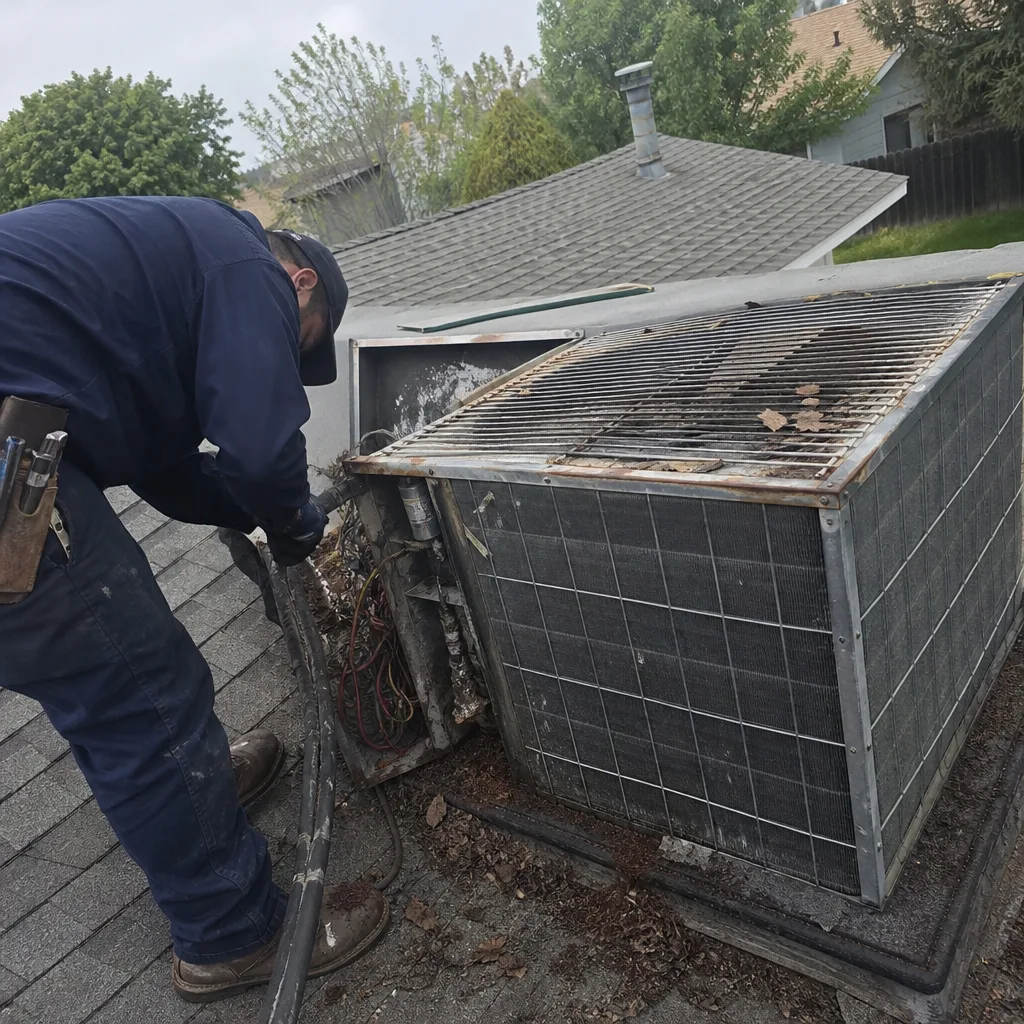 Before
 After
After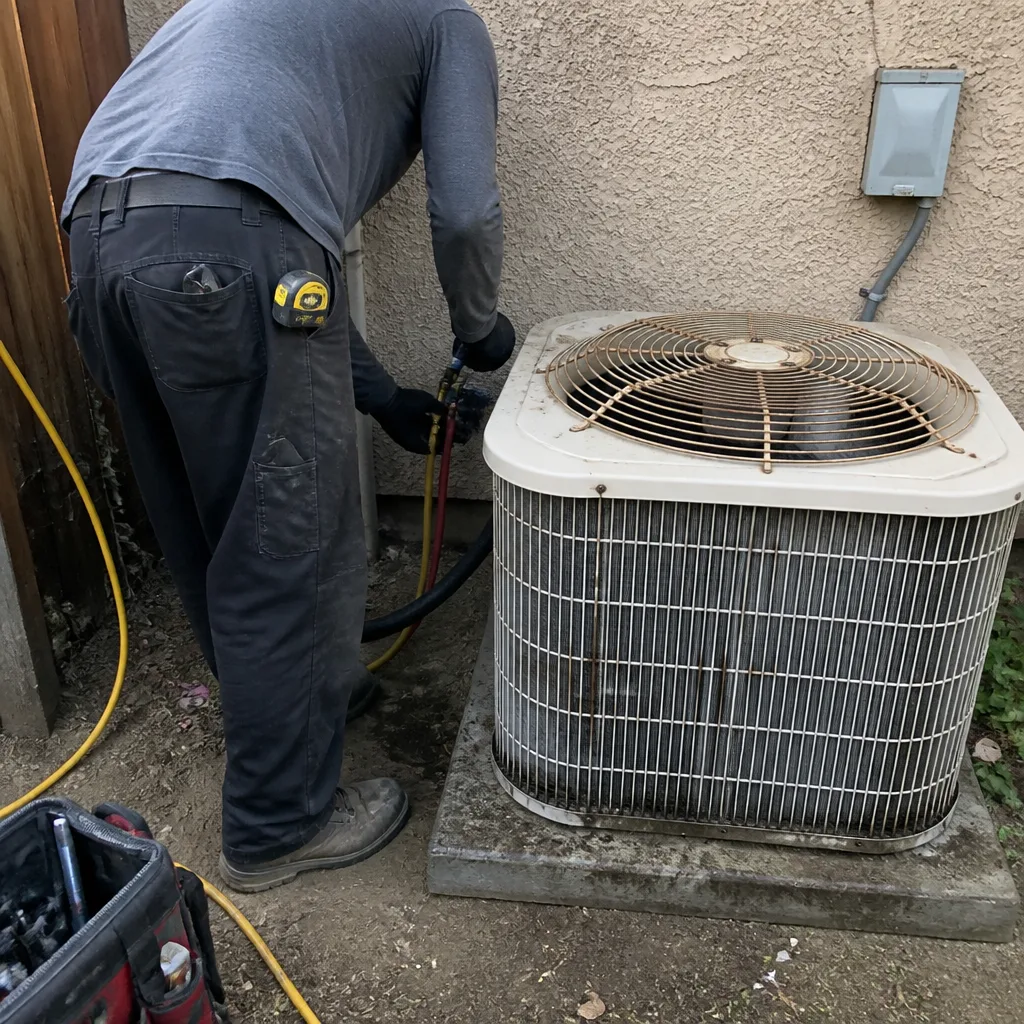 Before
 After
After